
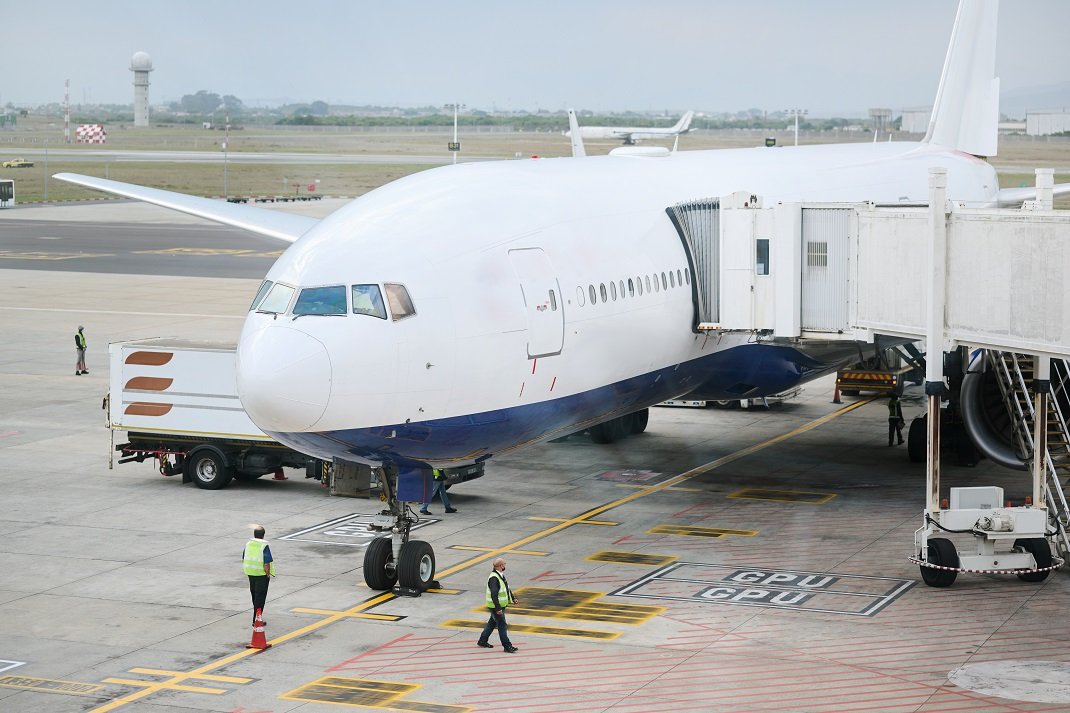
United Airlines Flight UA770 wasn’t supposed to trend. It was supposed to cruise, land, unload, and disappear into the quiet routine of commercial aviation. But the sky had a different plan. Somewhere mid-flight, something flickered—one of those technical hiccups you never want to hear about when you’re strapped into a seat at 35,000 feet. And just like that, Flight UA770 shifted from “another travel day” to a headline.
The crew didn’t waste time. They’re trained for moments like this—moments when a strange alert flashes, and you don’t get the luxury of pretending it’s nothing. They swung into action. Calm voices. Quick decisions. That kind of skill you only appreciate when things go sideways. The aircraft was diverted, and everyone on board held their breath just a little tighter than usual.
UA770 landed safely. You’d think the story ends there, but these incidents always leave a trail of questions behind them.
A Sudden Technical Issue That Changed Everything
Nobody buys a ticket and thinks, Yep, today’s the day my flight makes an emergency diversion. But that’s how aviation works—99.9% smooth, and the tiny remainder? Spikes your pulse.
Passengers onboard described a shift in the cabin atmosphere. Not panic—just that hush where everyone senses something’s off. Maybe the engines sounded different. Maybe the pilot stepped in with that steady voice pilots have mastered. Whatever it was, the message became clear: United Airlines UA770 was diverting immediately.
Technical problem. Mid-air. No room for hesitation.
And honestly? Better a detour than a disaster.
How the Crew Handled the UA770 In-Flight Emergency
You can tell a lot about an airline by how its people react when things aren’t pretty.
And United’s crew on UA770? Solid.
They moved like they’d been rehearsing this for years. (Because they have.)
They checked passengers. Calmed nerves. Maintained order in a cabin where anxiety could’ve blown up fast. And somehow, through all that tension, they kept that “we’ve got you” vibe alive.
Even the landing—sharp, precise, almost annoyingly professional considering the mid-air chaos leading up to it. Touchdown at the diversion airport felt like a collective exhale.
Scary? Yes.
Catastrophic? Not even close.
That’s the power of a trained crew.
Why United Airlines Flight UA770 Got Diverted
The exact technical issue hasn’t been fully unpacked publicly, which always invites a ton of speculation. AvGeeks start digging. Travelers imagine worst-case scenarios. Social media invents entire theories by breakfast.
But here’s the truth we do know:
-
Something on UA770 malfunctioned.
-
It wasn’t fixable mid-air.
-
Continuing the flight wasn’t worth the gamble.
Aviation doesn’t play with “maybe it’ll be fine.”
If the systems hint at trouble, the plane lands.
Simple.
It could’ve been a pressurization warning.
A sensor glitch.
A mechanical reading that didn’t match expected parameters.
Whatever the trigger was, it tripped the “nope, we’re diverting” switch.
And honestly? Thank God.

What Passengers Experienced During the Diversion
If you’ve ever been on a flight that suddenly veers off the original route, you know the drill:
-
The cabin goes oddly quiet.
-
People grip armrests like they’re life rafts.
-
Everyone checks their phone even though there’s no signal—habit beats logic.
Reports from UA770 passengers say exactly that. A weird mix of calm and fear, like everyone collectively agreed to pretend they weren’t freaking out.
One moment you’re thinking about snacks. Next moment you’re thinking about survival.
Air travel is dramatic like that.
Still, the silver lining? No injuries. No chaos. No aggressive turbulence.
Just a safe landing and a story nobody expected to collect that morning.
Aviation Experts Weigh In on UA770
Experts get it.
Technical issues don’t automatically equal danger. They equal caution.
Several analysts chimed in after the UA770 emergency diversion, pointing out that:
-
Diversions happen more often than people realize.
-
Most airborne technical alerts never escalate into real threats.
-
Modern aircraft are designed to warn early—sometimes too early, on purpose.
Think of it like a smoke detector that screams when you burn toast.
Annoying? Yes.
But better that than the alternative.
UA770’s situation fits that pattern.
Something beeped. Something didn’t match.
The pilots chose the safest option.
Smart move.
What Happens After an Emergency Diversion Like UA770
Airlines don’t just pat the plane on the head and send it back into the sky.
The process is intense:
-
Engineers swarm the aircraft.
-
Systems get scanned, poked, tested, dismantled if needed.
-
Every little anomaly is dissected until a root cause is pinned down.
Passengers often get rebooked.
The aircraft might be grounded for hours—or days.
Safety doesn’t negotiate.
UA770 likely went through the same drill. Maybe even more thoroughly because the media spotlight tends to amplify everything.
United Airlines, of course, has stayed tight-lipped, as they usually do until the investigation is wrapped.
Should You Be Worried About Flying After UA770?
Short answer? No.
Longer answer? Also no.
Commercial aviation is safer than crossing the street, and incidents like the UA770 emergency diversion prove that the system works. Not fails—works.
A technical problem popped up.
The plane diverted.
Everyone lived to complain about delays.
That’s success.
If anything, UA770 is a reminder that pilots are ridiculously prepared.
They train for scenarios you can’t even imagine.
And when faced with one? They handle it with surgeon-level precision.
Final Thoughts: UA770 Didn’t Fail—It Functioned Exactly as It Should
UA770 didn’t become news because something horrible happened.
It became news because something almost happened—and the people responsible for 200+ lives handled it flawlessly.
This wasn’t a crash.
This wasn’t a near-miss.
This wasn’t aviation falling apart.
It was aviation working.
A plane saw a problem.
A crew made the right call.
A cabin full of passengers got a scary story with a safe ending.
Honestly?
That’s the kind of “emergency” I’ll take any day.
 IQnewswire