
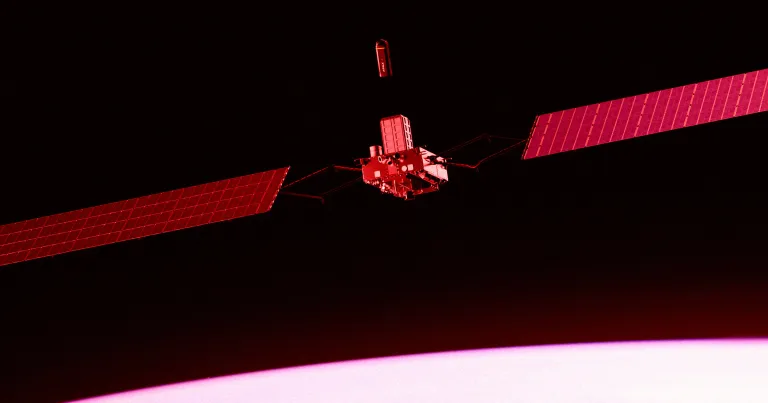
Introduction — Why the Space Force’s Orbital Warship Carrier Is Everywhere Right Now
The phrase Space Force orbital warship carrier sounds like something a sci-fi novelist scribbled at 3 a.m. after too much caffeine. Yet here we are, scrolling through actual defense news while this term keeps popping up like it’s auditioning to be the next big geopolitical headline. People want to know what this “orbital aircraft carrier” actually is, and why the Space Force suddenly cares about building an orbital carrier spacecraft that deploys satellites or defensive payloads straight from orbit. Honestly? Curiosity makes sense. Because if even half of this concept becomes real, the whole idea of controlling space shifts—fast.
What Is a Space Force Orbital Warship Carrier? (Full Meaning + Clear Definition)
Let’s strip the drama. An “orbital warship carrier” is not a floating Star Destroyer. No captain’s chair. No giant laser arrays. The term gets abused by hype merchants and YouTube thumbnails.
The real thing?
A pre-positioned orbital platform that behaves like a launch pad, storage depot, and rapid-response military asset… all at once.
Picture something in low Earth orbit that can:
-
drop satellites
-
send out drones
-
reposition defensive tech
-
extend Space Force reach without waiting on Earth-bound rockets
And then imagine doing all of that before an adversary even realizes you’ve made a move.
That’s why people keep hunting for terms like space warship carrier, orbital aircraft carrier, and orbital deployment platform. They’re trying to decode an idea the government barely explains.
Origin of the Concept — How the Orbital Aircraft Carrier Idea Started
The birth of this thing is more accidental than epic. It started with a mix of defense planning documents, private-sector aerospace proposals, and a sprinkle of science fiction baked into military strategy meetings. But the real spark?
Operational frustration.
Rocket launches are slow. Expensive. Weather-dependent. And painfully vulnerable.
The Space Force wanted a way to respond in minutes, not in days. Enter the concept of an orbital carrier—essentially a logistics giant parked above the planet.
Then Gravitics showed up and dropped the line:
“We can build an orbital carrier.”
Boom. STRATFI money hits the table. Headlines explode. Futurism writes their dramatic “Space Force is working on an aircraft carrier for space” article. And suddenly the world thinks we’re prepping for Zero Gravity Top Gun.
The Core Technology Behind the Orbital Carrier
This is where the thing gets spicy. The engineering behind an orbital carrier spacecraft isn’t just big metal and solar panels.
You’re looking at:
-
Modular spaceframes
-
Orbital hangar systems (nobody’s talking about this but it’s the whole point)
-
Docking rings for multiple spacecraft
-
Autonomous repositioning thrusters
-
Radiation shielding
-
Payload deployment bays
-
In-space logistics architecture
Imagine a warehouse orbiting Earth with the brain of a drone and the body of a space station. That’s the skeleton of an orbital aircraft carrier.
And it’s being built piece-by-piece because nobody has done this before.
How an Orbital Warship Carrier Works (Capabilities & Functionality)
Think less “battle” and more “deployment.” The Space Force orbital warship carrier isn’t firing anything. It’s launching things.
Capabilities include:
-
Rapid satellite deployment (the biggest selling point)
-
Replacing damaged satellites mid-conflict
-
Launching defensive countermeasures
-
Expanding surveillance reach
-
Hosting autonomous spacecraft (“space drones”)
-
Serving as an orbital refueling node (game changer)
Long sentence incoming: imagine a situation where an adversary disables an American communications satellite, and instead of panicking over rocket launch windows or weather delays or ground logistics, the Space Force hits a command panel inside the orbital carrier and drops a brand-new satellite into the exact slot within minutes, restoring capability before anyone on Twitter even hears the rumor.
Now breathe.
That’s the whole draw.
Strategic Purpose — Why the Space Force Wants an Orbital Carrier
Short version?
Space superiority.
Long version?
Because orbit is a battlefield now, whether governments want to admit it or pretend otherwise. Satellites control communications, banking, navigation, missile tracking—basically the entire backbone of modern civilization. Lose them, and everything goes dark.
So the orbital warship carrier steps into that world like a quiet bodyguard—never flashy, always ready.
Strategic value:
-
keeps the U.S. ahead of Russia & China
-
deters anti-satellite weaponry
-
accelerates response time
-
complicates enemy strategy
-
ensures control of orbital lanes
Space warfare isn’t sci-fi anymore. It’s Tuesday.
Funding, Partnerships & Current Development Progress
Here’s what’s confirmed:
-
Gravitics secured a $60 million STRATFI contract
-
The Space Force wants a demonstration orbital carrier
-
Modular hardware is already in the works
-
The Pentagon is hinting—quietly—that orbital logistics platforms are a priority
No timelines are public. Which usually means the real timeline is faster than they want anyone to know.
Global Competition: US vs China and the Carrier Arms Race
Thanks to TWZ’s coverage, we know China’s naval program is building a nuclear-powered carrier that already spooked analysts. That’s sea-level competition.
But space?
China’s been testing co-orbital systems, anti-satellite capabilities, and reusable spaceplanes. If the U.S. builds an orbital aircraft carrier, China won’t shrug. They’ll answer. Probably aggressively.
The Space Force orbital warship carrier becomes a chess piece—not just technology. Whoever masters orbital logistics owns the board.
Civilian & Commercial Uses (Huge Competitor Gap)
This is the part nobody else bothered exploring.
Orbital carriers could revolutionize non-military space. For example:
-
Space construction hubs
-
Satellite servicing depots
-
Orbital storage for scientific payloads
-
Tourism emergency response stations
-
In-space manufacturing nodes
-
Commercial deep-space launch staging
An orbital carrier could become the Home Depot of space travel. Unsexy analogy, but accurate.
Ethical, Legal & Risk Considerations
People get nervous for good reason.
Orbit is already cluttered, and adding massive military assets raises questions:
-
Are we breaking the Outer Space Treaty?
-
Where’s the line between defense and weaponization?
-
Who keeps orbital carriers in check?
-
Does this trigger a space arms race?
-
How do you avoid catastrophic debris fields?
One wrong move and you’re not losing one satellite—you’re losing dozens. Space isn’t forgiving.
Challenges & Criticisms
Not everybody loves this idea. Critics point to:
-
astronomical cost
-
vulnerability to space debris
-
difficulties defending a stationary orbital asset
-
technological limitations
-
concerns over militarizing low Earth orbit
And yeah, those criticisms aren’t wrong. They’re just not enough to stop the program.
Future Vision — What Orbital Carriers Could Become in 10–20 Years
This part reads like fiction, but so did “orbital carrier spacecraft” five years ago.
Future possibilities:
-
fully autonomous orbital carriers
-
fleets of modular military stations
-
US–allied orbital carrier networks
-
multi-country carrier zones
-
orbital warship swarms (yes, that’s a thing analysts discuss)
Space Force isn’t planning for next year. They’re planning for 2045.
FAQ Section (Keyword-Rich Answer Snippet Format)
Is the Space Force really building a space aircraft carrier?
Yes. A prototype orbital carrier concept is funded under the STRATFI program.
How would an orbital warship carrier work?
It deploys satellites and defensive payloads from orbit, acting like a rapid-response logistics hub.
Is the orbital carrier a weapon?
Not directly. It’s more of a support and deployment platform.
Does China have something similar?
Not publicly. But their military space ambitions suggest they’re watching closely.
When will the orbital carrier be operational?
No public date. Development is ongoing.