
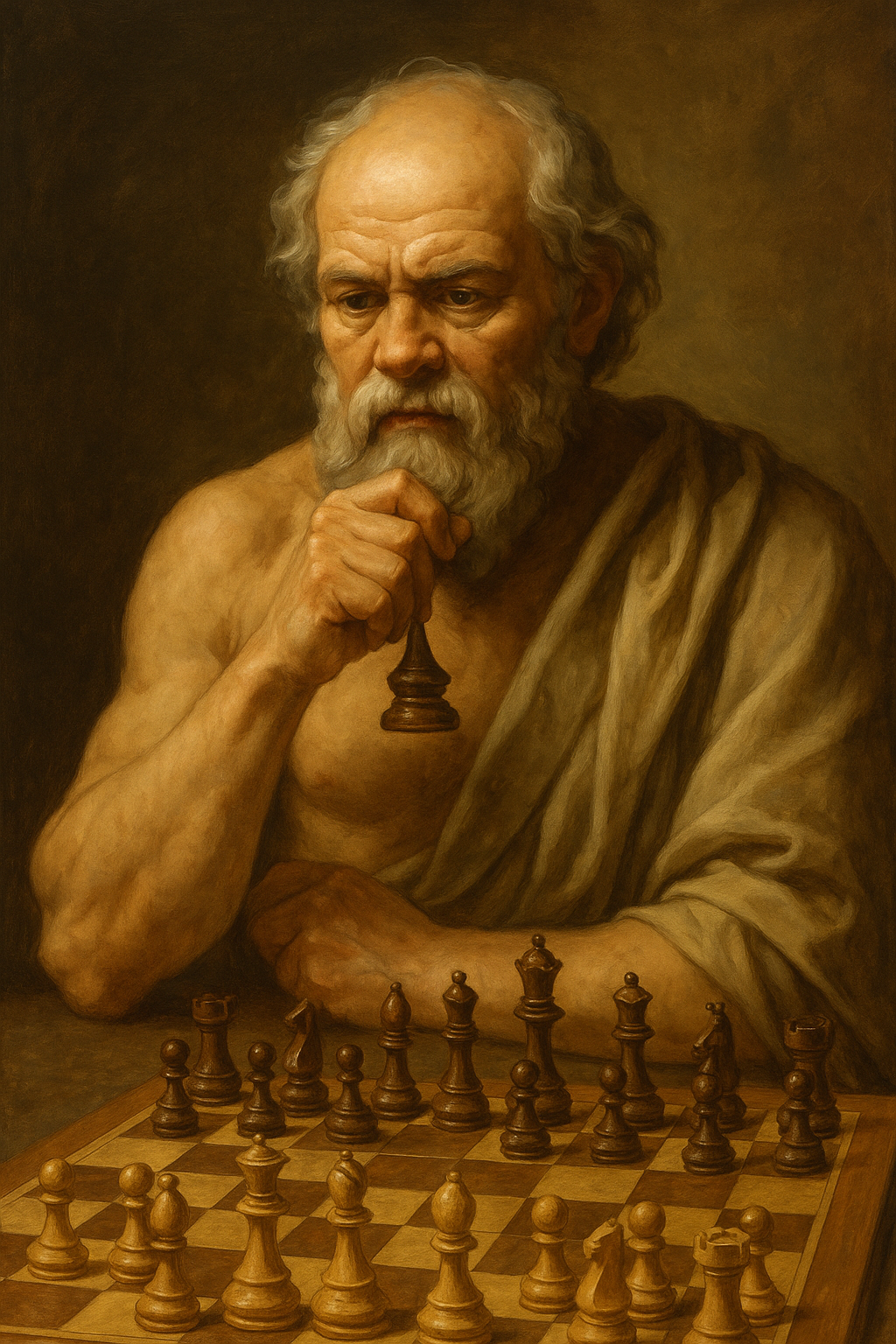
So… Who or What Is GM Sócrates Anyway?
GM Sócrates is one of those weird internet rabbit holes—you type his name into Google expecting a grandmaster, a philosopher, or maybe a Brazilian chess legend, and you end up staring at twenty different stories that don’t match each other at all. One site calls him a grandmaster of human thought. Another paints him like a rising chess prodigy. Then others treat him like this modern-day Socrates who knows how to survive the digital chaos with “strategic wisdom.”
Honestly? No wonder people are confused. The name alone pulls in everyone from chess geeks to philosophy nerds to folks just trying to understand this GM Sócrates meaning thing before they embarrass themselves in a conversation.
The Strange, Patchy Origin Story Nobody Can Agree On
If you try to trace the origins of GM Sócrates, you hit a wall. Not a fancy brick wall—more like one of those wooden fences your neighbor slapped together in a weekend. Early mentions showed up on tiny blogs built for traffic, not accuracy. They mashed chess language with Socratic logic and hoped for clicks.
And it worked.
People ran with it, assuming this guy was either:
-
A Brazilian grandmaster who never existed but sounds believable enough
-
A modern strategist wrapped in ancient philosophy
-
Or some hybrid concept invented for motivational content
The idea snowballed. Before long, GM Sócrates became this flexible symbol—a little chess, a little philosophy, a little “figure it out for yourself,” and somehow all roads pointed back to strategy.
Wild, but here we are.
The Philosophical Version: GM Sócrates as the “Grandmaster of Thought”
This is where things get interesting. Forget the chessboard for a second—the philosophical interpretation has depth. Well, more depth than the “fictional Brazilian grandmaster” storyline.
People who lean toward the strategist version of GM Sócrates see him as someone who plays life like a grandmaster plays chess.
Long view.
Calculated moves.
Socratic questioning.
It’s actually a solid way to look at decision-making. The Socratic method—asking uncomfortable questions until you corner the truth—fits nicely with the idea of a modern thinker navigating nonsense, noise, and misleading information online. You basically interrogate your own assumptions like they owe you money.
And that’s why the phrase “grandmaster of thought” sticks. Because it feels… accurate? Relatable? Almost like a blueprint for thinking more intelligently without turning into a boring academic robot.
The GM Sócrates Mindset: A Not-So-Fancy Framework People Actually Use
The GM Sócrates mindset isn’t this big dramatic philosophy. It’s more like a handful of habits that help you stop making impulsive choices you’ll regret by Thursday. People chase this mindset because it’s practical—yes, even if the character himself is fuzzy.
Here’s what this “grandmaster of thought” framework looks like in the real world:
1. Ask the annoying questions
The Socratic method thrives on tough questions. The ones you’d rather skip.
“Why am I thinking this?”
“What am I missing?”
“Did I just assume something dumb?”
You do that enough and suddenly your decisions get a whole lot sharper.
2. Slow your brain down
Life moves at a snappy pace. GM Sócrates represents the opposite: pause first, decide second.
People hate this step—because slowing down feels unproductive—but it’s probably the strongest part of the mindset.
3. Focus on the long game
Chess players don’t obsess over one move. They look twelve moves ahead.
Same energy here. You think about consequences, ripple effects, and the person you’re becoming in the process.
4. Strip away emotional noise
You know that moment where you’re mad and ready to make a stupid decision?
Yeah. Don’t.
GM Sócrates thinking means letting emotion have a seat in the room but not giving it the steering wheel.
This is the stuff people want when they’re hunting down GM Sócrates meaning, modern thinking strategies, or how Socratic thinking helps daily decisions. It fits perfectly with a world where clarity feels like a luxury.
Why This Mindset Works in the Digital Age
You ever scroll through your feed and feel your brain getting foggy? Same. The digital world encourages speed, not depth. Everyone reacts instantly. Everyone has a “hot take.” Everyone’s shouting.
A GM Sócrates approach slices through that noise. You question things. You pause. You break arguments into little puzzle pieces.
This mindset hits differently today because it gives you control when everything else feels rushed. People call it “applying GM Sócrates in the digital age,” but honestly, it’s just you refusing to be another person yelling opinions without thinking them through.
Feels refreshing, doesn’t it?
The Chess Interpretation: The Fictional Grandmaster People Still Believe In
Let’s talk about the chess angle for a second. The myth of GM Sócrates as a Brazilian grandmaster just won’t die. A few blogs pushed the story, slapped on dramatic language like “rise to fame” and “aggressive playstyle,” and readers just… believed it.
And who can blame them?
Chess legends are cool. Brilliant under pressure. Unpredictable.
People love the idea of a genius no one has heard of suddenly getting recognition.
The reality? There’s zero evidence this grandmaster ever existed. But the idea stuck because it captures something deeper: the fantasy of a mind so sharp it cuts through noise like butter.
The fictional part almost makes the myth stronger.
GM Sócrates vs. Real Socrates: Same-ish Name, Very Different Game
It’s funny how people try to tie GM Sócrates back to the real Socrates, as if the ancient philosopher was sitting around teaching people how to master competitive chess or modern reasoning.
But comparing the two is weirdly helpful.
Socrates was all about questioning—forcing people to confront their own contradictions until they basically talked themselves into clarity. GM Sócrates evolves that idea into something modern: a strategic mindset built for messy, digital-era problems.
One used dialectics.
The other (supposedly) uses a mix of chess logic and mental discipline.
The overlap is there, just not as tidy as some articles pretend.
Why GM Sócrates Resonates on a Psychological Level
People love icons of mastery. Whether it’s a chess prodigy or a philosophical strategist, the idea of someone operating at a higher mental level is… appealing. Inspiring, even.
GM Sócrates taps into that desire to think better, whether you’re making a career move or figuring out what to do with your day. He represents intelligence without arrogance. Clarity without ego. Strategy without rigidity.
Maybe that’s why the myth keeps growing.
It scratches an itch people don’t talk about: wanting guidance without being talked down to.
How to Try This GM Sócrates Approach Yourself
You don’t need a toga or a chessboard.
Just a few habits you can start today:
-
Ask one more question than you normally would.
-
Wait ten seconds before reacting to anything important.
-
Look at decisions as if you’re watching them from ten steps back.
-
Treat your thoughts like chess pieces—each with a use, not all equal.
-
Challenge your first assumptions. They’re usually the laziest ones.
These simple moves build a mindset people associate with GM Sócrates strategy, Socratic reasoning, and modern strategic thinking. Nothing fancy—just solid mental maintenance.
Myths, Misfires, and Bad Interpretations
You’ll find plenty of questionable takes online. Some act like GM Sócrates is a real historical figure. Others insist he’s a mastermind with a secret method. A few blogs treat him like a spiritual guru.
But hey, that’s the internet for you.
Here’s the truth: GM Sócrates works best as a metaphor. A model. A philosophy you can grab pieces of without needing a perfect origin story. People obsess over whether he’s real, but they’re missing the point. The value is in the thinking style, not the biography.
Quick FAQs People Keep Asking
Is GM Sócrates real?
No solid proof. The myth is more interesting than the truth.
Why do blogs describe him as a chess grandmaster?
Because it sounds good and people love strategy metaphors.
What’s the GM Sócrates approach?
Slow thinking. Smart questions. Long-game decisions.
Do you need to know philosophy to apply it?
Nope. You just need to stop rushing your thoughts.
Final Word
GM Sócrates might be fictional, philosophical, symbolic, or all three—but the mindset around him has real staying power. People crave clarity. They crave strategy. They crave a way to think that doesn’t feel sloppy or rushed.
And that’s what keeps this strange, fascinating concept alive.
 IQnewswire